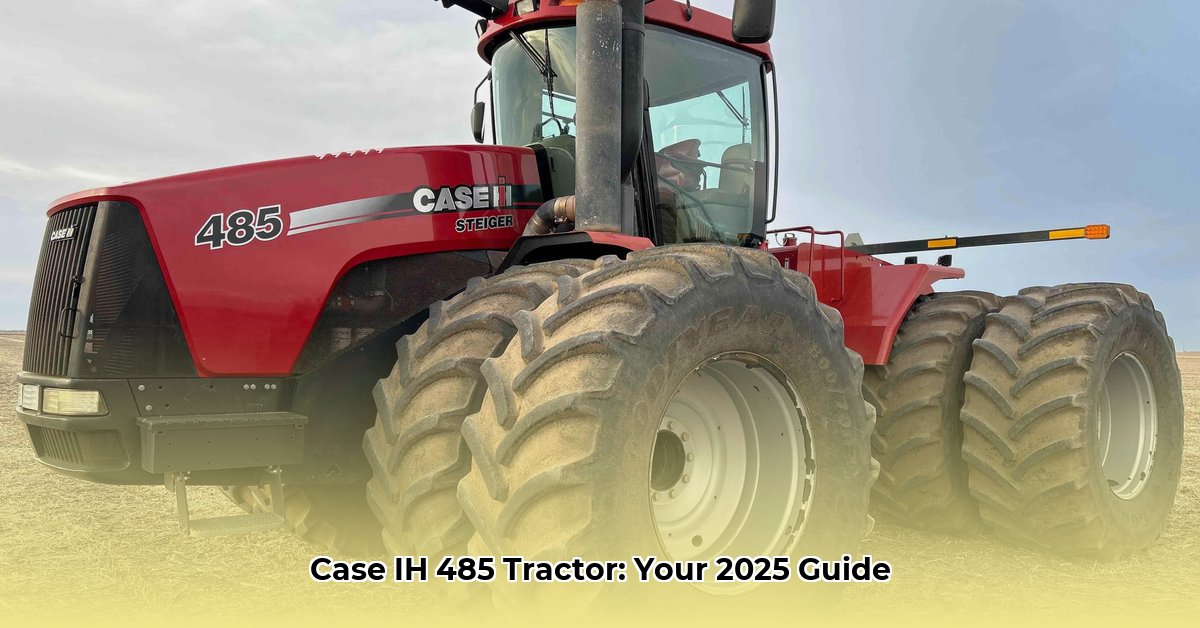
The Case IH 485, a stalwart of the agricultural world, presents a compelling option for farmers, collectors, and enthusiasts alike. Produced between 1985 and 1991, this tractor's robust design and relative simplicity make it a valuable asset, even in today's market. However, navigating the used tractor market requires careful planning and informed decision-making. For more information on vintage Case IH tractors, check out this helpful resource: Vintage IH Tractors. This guide provides step-by-step instructions for potential buyers, parts suppliers, collectors, and auction houses.
Understanding the Case IH 485 Tractor
The Case IH 485 is renowned for its reliability and straightforward mechanics. Its relatively simple design simplifies maintenance, a key benefit for those comfortable with hands-on work. While it lacks the advanced features of modern tractors, this simplicity can translate to lower ownership costs and increased longevity with proper care. However, its age necessitates a thorough inspection and understanding of potential repair needs for any potential buyer.
For Potential Buyers: A Step-by-Step Buying Guide
Purchasing a Case IH 485 involves careful planning. Here's how you can ensure a successful purchase:
Define Your Needs and Budget: Before searching, determine your requirements. What tasks will the tractor perform? How large is your property? This influences the necessary horsepower and features. Set a realistic budget using online resources to benchmark prices in your area. Aren't you curious about the price range for a well-maintained Case IH 485 in your region?
Research Online Marketplaces: Explore websites specializing in farm equipment, online auctions, and classified ads. Compare prices, operating hours, and condition. Detailed photos are crucial; don't overlook them. Did you know that a comprehensive online search can reveal hundreds of listings, significantly expanding your options?
Pre-Purchase Inspection (Absolutely Essential): A qualified mechanic's inspection is paramount. They'll identify issues you might miss—engine, transmission, hydraulics, and all major components should be examined. Look for wear, tear, rust, and leaks. Ignoring this step can lead to costly surprises down the line.
The Test Drive: Feel the Machine's Response: A test drive is essential to assess the tractor's responsiveness and identify operational issues. Pay close attention to steering, braking, and overall performance. Try various functions to reveal any hidden problems. Remember, a thorough test drive can uncover potential issues you wouldn’t detect during a static inspection.
Price Negotiation: The Art of the Deal: Armed with your inspection report and market research, negotiate effectively. Politely but firmly point out any issues to justify a lower price. Remember, it's a negotiation—finding the balance between a fair price and a mutually beneficial agreement is paramount.
Paperwork and Ownership Transfer: Ensure all paperwork is in order. Properly transferring ownership legally protects both buyer and seller. This step should not be overlooked.
Parts & Service: Ensuring Long-Term Operation
Obtaining parts for a Case IH 485 may require a multi-pronged approach:
Local Dealerships: Check with local Case IH dealerships. While some parts may be discontinued, they might still have stock or be able to order them.
Online Marketplaces: Online marketplaces (e.g., eBay) and agricultural parts websites offer a wide selection. Carefully review seller reviews before buying.
Specialty Parts Suppliers: Businesses specializing in parts for older farm equipment can be invaluable for hard-to-find items.
Preventive Maintenance: Regular maintenance is key to avoiding costly repairs. Familiarize yourself with the maintenance schedule and adhere to it diligently. Proactive maintenance can significantly extend the lifespan of your tractor.
Collectors and Restorers: A Passion Project
Restoring a Case IH 485 can be a rewarding but challenging undertaking. Success relies on planning and persistence:
Thorough Condition Assessment: The tractor’s initial state dramatically affects restoration time and cost.
Parts Sourcing: Be prepared for a potentially lengthy parts search. Online communities dedicated to vintage tractors are essential resources.
Community Engagement: Connecting with other enthusiasts provides invaluable support and guidance.
Auction Houses: Navigating the Bidding Process
Auction purchases demand strategic planning:
Pre-Auction Inspection: Thoroughly inspect the tractor before bidding to identify potential issues and establish a realistic maximum bid.
Budget Adherence: Set a firm maximum bid and stick to it. Auction fever can lead to overspending.
Market Research: Research recent sales of similar Case IH 485 tractors for a realistic valuation.
Case IH 485 Tractor: Pros and Cons
| Pros | Cons |
|---|---|
| Generally lower purchase price than new tractors | Parts availability may be a challenge in some regions |
| Simpler mechanical design, potentially easier repairs | Lower horsepower compared to modern tractors |
| Good parts availability (generally) | May require more maintenance than newer models |
| Affordable entry point to farming/hobby farming | Lacks the advanced features of modern equipment |
This guide helps navigate the complexities of buying, maintaining, and restoring a Case IH 485. Further independent research and thorough inspections are crucial for successful ownership.